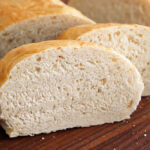
Easy Homemade French Baguettes
Easy Homemade French Baguettes
Servings 1 loaves (12 small slices each)
Equipment
- Stand Mixer (or you can do this entirely by hand)
- Baking Sheet
- Lint Free Towel or Plastic Wrap
- Oil for the bowl
Ingredients
- 1 c Water about 104 to 114 degrees
- 2 3/4 c BREAD Flour
- 1 tbsp Sugar
- 1 tsp Salt
- 1 1/2 tsp Instant Dry Yeast
TO BROWN THE CRUST DURING BAKING:
- an egg wash or for a vegan option, almond milk lightly brush all over the dough before baking
Instructions
- In a measuring cup (or your mixing bowl) add the warm water and yeast. To that, add the sugar and allow the yeast to bloom or activate. A good, live yeast will bubble at the surface and that is how you know it will perform for you. If your water is too cold or too hot, it will either not activate or kill the yeast. The sugar "feeds" the yeast to create this action.
- After about five or ten minutes, you can proceed with the salt and bread flour. All purpose flour will create a dense dough so while you could use it, it won't be the same per se.
- Your dough should be sticky, but manageable. If it's too dry or crumbly, you need a touch more water. If it's too wet, a bit more flour. Knead the dough with a dough hook on your mixer (or by hand) until smooth and elastic.
- Place into an oiled bowl with either a towel or plastic wrap. I prefer the plastic because the yeast wants to be warm (not hot) and the plastic retains the heat. Place in a warm place to rise until doubled. This can take 30 minutes to an hour.
- Take the risen dough and form into two loaves. Cover and allow to rise again for 30 minutes. I take this time to preheat the oven to 375 degrees. You can also prepare your wash of either egg/water or for a vegan option, almond or non-dairy milk.
- Bake until golden and hollow sounding when the bottom of the loaf is tapped. This takes anywhere from 20-25 minutes.
- Cool before slicing.